
Culverts are one of the most overlooked parts of land drainage infrastructure. Often hidden beneath roads, tracks or access routes, they quietly carry water beneath the surface and allow drainage systems to function as intended.
Because they are largely out of sight, culverts can go unnoticed for long periods. However, when they become blocked, damaged or restricted, the effects can quickly become visible. Water may begin to back up, access routes can become unstable and surrounding land may struggle to drain properly.
For farms, estates, forestry land and commercial sites with private roads or tracks, regular culvert inspections play an important role in maintaining safe access and effective drainage.
What is a culvert and how does it work? 
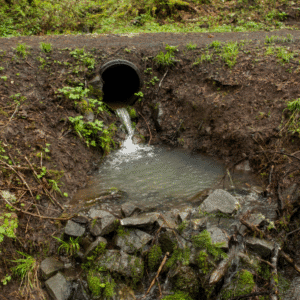
A culvert is a structure that allows water to pass beneath a road, track, embankment or access route. It typically consists of a pipe or concrete channel that directs water from one side of the obstruction to the other.
Culverts are commonly used within:
- rural land drainage systems
- farm access roads
- estate tracks and driveways
- forestry routes
- drainage ditches and watercourses
By allowing water to move through the landscape, culverts help prevent water from building up around roads and low points.
Why culverts are critical for access and land management
Although culverts may appear simple, they play an essential role in maintaining safe and reliable infrastructure.
When a culvert is functioning properly it:
- allows water to pass beneath roads and tracks
- prevents surface water from pooling
- protects road foundations from erosion
- supports wider drainage systems across the land
Without functioning culverts, water may divert across surfaces or accumulate in areas where it was never intended to collect.
Over time this can damage access routes and surrounding ground.
Why early spring is a practical time to inspect culverts
Early spring is often when drainage issues become easier to identify. After the winter period, debris, sediment and vegetation can accumulate within culverts and drainage channels.
March is a practical time for inspection because water is still moving through drainage systems, making restrictions or blockages easier to detect. At the same time, ground conditions are often more accessible than during the winter months.
For many landowners and land managers, this period provides an opportunity to check culverts and drainage channels before activity increases later in the year.
Identifying potential issues early helps ensure water can move through the drainage system as intended and reduces the risk of access routes or surrounding land being affected.
Common culvert problems
Because culverts sit within natural drainage channels, they are exposed to a wide range of debris and environmental conditions.
Some of the most common culvert issues include:
Debris blockage
Leaves, branches and other debris can collect at the entrance of a culvert. Over time this build-up can restrict water flow and cause water to back up.
Sediment build-up
Silt and soil carried by water may gradually accumulate inside the culvert pipe. This reduces capacity and prevents water from flowing freely.
Vegetation growth
Plants and roots can grow into culvert entrances or drainage channels, further restricting flow.
Structural damage
Older culverts can crack, collapse or become displaced due to ground movement or long-term wear.
Signs a culvert may need inspection
Because culverts are often hidden beneath roads or embankments, problems are not always immediately obvious.
However, some common warning signs include:
- water pooling near access routes
- erosion around culvert entrances
- debris collecting at the inlet
- slow drainage in nearby ditches
- damaged road or track surfaces above the culvert
If these signs appear, a culvert inspection can help determine whether maintenance or clearing is required.
Culverts and drainage on forestry land and rural estates
Culverts play a particularly important role on forestry land, estates and rural access networks.
Many forestry tracks and estate roads rely on culverts to carry water beneath the surface and prevent erosion of the road structure. If water cannot pass through the culvert, it may begin to flow across the road surface instead.
Over time this can lead to:
- erosion of track surfaces
- damage to road foundations
- restricted vehicle access
- deterioration of surrounding land drainage
For forestry operations, where heavy machinery and timber transport depend on reliable access routes, maintaining drainage infrastructure is essential.
Regular inspection of culverts helps ensure water continues to move through the landscape as intended and prevents damage to tracks, roads and surrounding land.
Why regular culvert inspections are important
Routine inspection allows potential issues to be identified before they develop into larger problems such as:
- flooding of access routes
- erosion around road foundations
- drainage failure across surrounding land
- structural collapse of the culvert itself
For farms, estates and rural businesses, maintaining reliable access routes is essential for day-to-day operations.
How Drain & Sewer Services can help
Drain & Sewer Services provides inspection and maintenance support for culverts across rural and commercial sites.
Our services include:
- culvert inspection and assessment
- clearing debris and sediment build-up
- high pressure jetting to restore water flow
- CCTV inspection where structural issues are suspected
- drainage support for land, estates and commercial properties
Regular inspection helps ensure culverts remain clear and capable of managing water flow.
Conclusion
Culverts may sit out of sight beneath roads and tracks, but they play a vital role in maintaining effective drainage and protecting access routes.
When culverts become blocked or damaged, the impact can extend beyond the drainage system to affect surrounding land and infrastructure.
Regular inspection and maintenance help ensure culverts continue to function properly and prevent small issues from becoming larger problems.
If you are responsible for maintaining rural land, estate infrastructure or private access routes, professional culvert inspection can help protect your drainage systems.
FAQs
What is a culvert used for?
A culvert allows water to pass beneath a road, track or embankment as part of a drainage system.
How do culverts become blocked?
Culverts often become blocked by debris such as leaves, branches, sediment or vegetation growth.
How often should culverts be inspected?
Culverts should be inspected regularly, particularly where they form part of land drainage systems or access routes.
What happens if a culvert fails?
If a culvert becomes blocked or damaged, water may back up and cause flooding, erosion or damage to surrounding infrastructure.