
Why prolonged rainfall increases septic tank risk
Across many parts of the UK, land has remained saturated well beyond typical winter conditions. Fields have struggled to drain, rural access routes have softened and low-lying ground has held water for extended periods.
For properties that rely on septic systems rather than mains drainage, saturated ground presents a specific risk. Septic tanks depend on surrounding soil to disperse treated effluent. When groundwater levels rise above the drainage field or tank itself, the system cannot function as designed.
This is when septic tank flooding after heavy rain becomes a serious operational issue.
How septic systems rely on the ground around them 
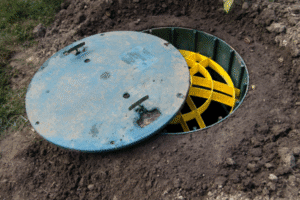
A septic tank is a small-scale sewage treatment system used at properties without connection to the mains sewer network. It separates solids from liquids and allows partially treated effluent to discharge into a soakaway or drainage field.
For this process to work effectively:
- The surrounding soil must be unsaturated
- Effluent must percolate through the ground
- The water table must remain below the drainage field
- The system must not be hydraulically overloaded
When soil remains saturated for prolonged periods, the ground can no longer absorb additional discharge.
What happens when groundwater rises
During extended wet weather, groundwater levels can rise significantly. When the water table reaches or exceeds the level of the drainage field:
- Effluent cannot disperse
- Back pressure develops in pipework
- Internal drainage slows
- Toilets and sinks may gurgle
- Wastewater may back up
- Surface ponding may appear above the soakaway
This is not always a maintenance failure. It is often a hydraulic issue caused by elevated groundwater.
Why this risk is increasing
Recent winters have seen more frequent periods of sustained rainfall. Warmer air holds more moisture, and meteorological patterns can result in repeated low-pressure systems moving across the UK.
While individual events vary, extended wet periods are placing greater pressure on rural drainage infrastructure and off-mains wastewater systems than many properties were originally designed for.
For septic systems, this means groundwater saturation events may become more common.
Warning signs of septic tank flooding
Septic flooding during prolonged rainfall may present as:
- Gurgling pipework
- Slow draining internal fixtures
- Unpleasant odours outdoors
- Boggy ground near the drainage field
- Surface water collecting above soakaway areas
If these symptoms coincide with sustained wet weather, rising groundwater may be affecting the system.
Why rural and off-grid properties are particularly vulnerable
Rural homes, farms, forestry sites, holiday accommodation and off-grid commercial properties often rely entirely on septic systems.
Many are located in:
- Low-lying land
- Clay-heavy soil
- Proximity to rivers or watercourses
- Fields prone to saturation
In these environments, prolonged rainfall drainage pressure affects both surface water and subsurface foul systems.
For commercial landowners, septic failure can interrupt operations, create environmental risk and potentially lead to compliance issues under Environment Agency General Binding Rules.
How Drain & Sewer Services supports septic systems during prolonged rainfall
When septic tank flooding becomes a risk, professional assessment is important.
Drain & Sewer Services provides comprehensive septic tank support for both domestic and commercial properties.
Septic tank emptying
Our experienced teams carry out septic tank emptying using powerful vacuum and tanking equipment. As a registered waste carrier, we remove contents to licensed disposal facilities and complete all required documentation in line with environmental regulations.
Septic tank cleaning
Alongside routine emptying, we offer septic tank cleaning. This includes jetting inlet and outlet lines, inspecting pipework, checking soakaway performance and clearing growth or debris that may restrict discharge.
Septic tank installation
We also advise on, quote for and install septic tank systems. Our team conducts site visits, ground testing and percolation assessments, calculating system capacity based on occupancy levels and appliance discharge to ensure compliance and long-term performance.
Where prolonged rainfall has affected an existing system, inspection helps determine whether the issue is temporary groundwater pressure or a structural or design concern.
What can be done during prolonged rainfall
When groundwater is already elevated, prevention options are limited. However, the following steps may reduce strain:
- Reducing water usage temporarily
- Avoiding unnecessary discharge to the system
- Diverting surface water away from soakaway areas
- Ensuring gutters and land drainage do not discharge near the tank
If backflow or persistent saturation occurs, professional intervention should not be delayed.
After rainfall subsides: why inspection still matters
Even once rain reduces, groundwater may remain high for weeks. Septic systems under prolonged pressure may experience:
- Silt migration
- Pipe displacement
- Compromised soakaway performance
- Structural stress within the tank
CCTV inspection and system assessment can identify hidden damage and reduce the risk of repeated failure during future rainfall events.
Conclusion
Prolonged rainfall does not only affect surface drainage. When groundwater rises above septic systems, septic tank flooding becomes a serious operational and environmental concern.
Recognising the signs early and seeking professional support where necessary helps protect property, land and compliance.
If sustained rainfall is affecting your septic system, Drain & Sewer Services is ready to provide practical, professional support.
Frequently asked questions
Can heavy rain cause a septic tank to back up?
Yes. Rising groundwater can prevent effluent from dispersing, leading to back pressure and internal drainage issues.
Is septic tank flooding the same as a blockage?
No. During prolonged rainfall, flooding is often caused by hydraulic saturation rather than obstruction.
Should a septic tank be emptied during flooding?
Emptying may provide temporary relief but does not resolve groundwater saturation. Professional assessment is recommended.
How long does it take for a septic system to recover after heavy rain?
Recovery depends on soil type and groundwater levels. Saturation may persist after rainfall ends.
Do septic systems need regular maintenance?
Yes. Routine emptying and inspection help maintain performance and compliance.
