
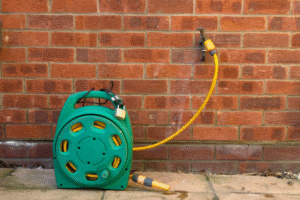
 If you run a commercial site anywhere across the South East, you’ve likely already seen a hosepipe ban notice from your water supplier this summer. South East Water introduced a temporary use ban across Kent from 3 July, Southern Water followed with a ban covering Hampshire and the Isle of Wight from 10 July, and Affinity Water has announced a ban for its central supply region, covering Berkshire, Buckinghamshire, Surrey, Bedfordshire, Hertfordshire, Essex and parts of London, coming into force from 17 July. Between them, these hosepipe bans now touch most of the counties Drain & Sewer Services works across, and they point to a drainage risk that’s easy to miss.
According to the Environment Agency, Hampshire and the Isle of Wight have moved from normal to prolonged dry weather status, and all regions of England now have drier than average soils. It’s tempting to read a hosepipe ban as simply “less water to use.” For facilities managers and commercial property owners, though, the drought conditions behind it create a less obvious risk to drainage systems, one that often shows up not during the dry spell itself, but in the days after it finally breaks.
Why a drought increases flood risk later
The Environment Agency’s most recent drought report notes that river flows and groundwater levels are continuing to decline nearly everywhere, with reservoir storage nationally at 82.9% in the week ending 7 July, below the long-term average for the time of year.
Dry, compacted ground behaves very differently to normal soil when rain finally arrives. Instead of absorbing rainfall gradually, hardened ground sheds water rapidly across the surface, overwhelming gullies, road drains and surface water systems that are designed for a steadier rate of flow. The Environment Agency’s own forecast for the coming weeks notes a rising risk of thunderstorms spreading into southern England, exactly the kind of short, intense rainfall event that catches drainage systems still adjusted to weeks of dry weather.
For commercial sites, this often shows up as:
- Surface flooding in car parks and yards, even from rainfall that wouldn’t normally cause an issue, because surrounding ground can’t absorb water at the same rate
- Blocked gullies and road drains, clogged with dust, grit and debris that has built up during the dry spell and gets washed into the system all at once
- Sudden surcharging of drains that have been running with reduced flow for weeks, as the first heavy rain arrives faster than the system can clear it
The ground itself is also under strain
Alongside the flood risk, prolonged dry weather affects underground infrastructure directly. Clay soils across Hampshire, Surrey, Berkshire and Kent shrink as they lose moisture, which can shift or crack drainage pipes that were previously stable. Soakaways and septic systems relying on natural groundwater levels can also be affected by falling water tables, particularly on rural and semi-rural commercial sites where private drainage is common.
The combination matters. Ground that has shrunk and cracked pipework over the summer is then hit with the kind of intense rainfall event that puts maximum pressure on the system, right when it’s least able to cope.
What commercial sites should check now
- Clear gullies and road drains of accumulated debris before the next significant rainfall, rather than after.
- Check soakaways and septic systems for signs of reduced capacity, particularly if they haven’t been serviced this year.
- Look at car parks, yards and access roads for new cracking or uneven surfaces that may indicate ground movement.
- Review surface water drainage on sites with a history of localised flooding, since dried-out ground raises the risk even in areas that don’t usually flood.
- Book a CCTV drain survey if your pipework is due an inspection, ideally before the first heavy rain of the season rather than after.
How Drain & Sewer Services can help
We provide CCTV drain surveys, gully and drain cleaning, soakaway and septic tank servicing, and emergency call-out cover to commercial, industrial and managed sites across the South East, and will travel further where it’s practical to do so. If your site hasn’t had its drainage checked since before this summer’s dry spell, now is the time, not after the first storm.
To arrange a survey, a gully clean or a septic tank service, call us on 01252 312738 or email info@drainandsewer.co.uk.
Frequently asked questions
Does a hosepipe ban affect commercial drainage systems?
Not directly. A temporary use ban restricts specific water uses like hosepipes and sprinklers. However, the drought conditions behind the ban, dry soil, low groundwater and reduced rainfall, can affect drainage pipework, soakaways and septic systems, which is a separate but related issue.
Why would a drought increase flood risk?
Dry, compacted soil absorbs water far more slowly than normal ground. When heavy rain follows a dry spell, it runs off the surface rather than soaking in, which can overwhelm gullies and surface water drains that would normally cope without issue.
Which areas are affected by hosepipe bans this summer?
As of July 2026, South East Water has a ban in force across Kent (from 3 July), Southern Water across Hampshire and the Isle of Wight (from 10 July), Anglian Water across most of its East of England supply area (from 11 July), and Affinity Water across its central region, including Berkshire, Buckinghamshire, Surrey, Bedfordshire, Hertfordshire, Essex and parts of London (from 17 July). Cambridge Water follows from 17 July too. Check your own water supplier’s website for the latest status in your area.
Should I get my drains checked during a dry spell, or wait until it rains?
Checking during the dry spell is better. Issues like cracked pipes, blocked gullies or reduced soakaway capacity can be identified and addressed before the next heavy rainfall puts the system under pressure.
