
Across commercial sites, the first sign of a drainage issue is often not inside the pipework. It appears on the surface.
Standing water in a car park, soft areas in a yard or movement in block paving are all common early indicators that a drainage system may not be performing as it should. These issues can develop gradually and are often first noticed in areas that see regular use.
For site managers and facilities teams, recognising these signs early can help prevent more disruptive problems later on.
Why hardstanding areas reveal drainage issues early 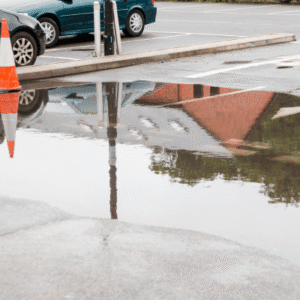
Yards, car parks and access roads are designed to handle both traffic and surface water. Because they are exposed and frequently used, any issues with drainage tend to become visible more quickly in these areas.
Water that does not drain away properly will collect on the surface. Over time, repeated saturation can begin to affect the condition of the ground beneath, as well as the surface itself.
This is why drainage faults often appear first in:
- car parks
- loading bays
- access roads
- yard areas
- hardstanding around buildings
These locations provide early visual evidence that something within the drainage system may require attention.
What surface-level issues can indicate
Visible changes on the surface are often linked to underlying drainage problems.
Common signs include:
- standing water or ponding after rainfall
- cracking or movement around gullies
- uneven or settled block paving
- soft or unstable ground near access routes
- erosion along kerbs or edges
- recurring damp patches that do not dry out
These issues may point to:
- blocked or restricted drainage pipework
- insufficient surface water drainage capacity
- damaged or poorly functioning gullies
- saturated sub-base materials
- poor surface falls or drainage design
In many cases, the surface condition is simply the first indication of a wider issue below ground.
Why drainage and groundworks often need to be considered together
When drainage faults begin to affect the surface, resolving the issue often involves more than clearing a blockage.
If water has been allowed to collect over time, it can weaken the underlying structure of the surface. Sub-base materials may become saturated, paving may begin to shift and edges can lose stability.
In these situations, a complete solution may involve both:
- drainage investigation and repair
- surface reinstatement or groundworks
This can include:
- repairing or replacing damaged gullies
- improving surface water flow
- reinstating road surfaces
- installing or repairing kerbs
- relaying block paving or hardstanding areas
Taking a combined approach helps ensure the problem is resolved properly rather than temporarily addressed.
Why early investigation makes a difference
Surface-level drainage issues are often easier to address when identified early.
If standing water, movement or soft ground is investigated at an early stage, the cause can usually be identified and resolved before more extensive damage occurs.
Delaying action can lead to:
- deterioration of access routes
- increased maintenance costs
- disruption to site operations
- safety risks for vehicles and pedestrians
For commercial sites, maintaining safe and reliable access is essential, making early inspection a practical step in managing risk.
How Drain & Sewer Services can help
Drain & Sewer Services supports commercial properties, estates and rural sites across the South East with both drainage and groundworks solutions.
Our services include:
- CCTV drain surveys to identify underlying issues
- high pressure jetting to restore flow
- drainage repairs and maintenance
- surface water drainage improvements
- culvert inspection and clearance
- groundworks and hardstanding repairs
- kerbing, road and access route reinstatement
- block paving installation and repair
By combining drainage expertise with groundworks capability, we can provide a complete solution where both surface and underlying issues need to be addressed.
Conclusion
Drainage faults often become visible first in yards, car parks and access roads, where water movement and surface condition are easiest to observe.
Standing water, surface movement and soft ground are not just isolated issues. They are often early indicators of a wider drainage problem.
By identifying these signs early and taking a coordinated approach to both drainage and groundworks, businesses can maintain safe access routes and avoid more significant disruption later on.
If you are noticing drainage issues across your site, Drain & Sewer Services can provide practical support, from investigation through to repair and reinstatement.
FAQs
Why do drainage problems show first in car parks and yards?
Because these areas are exposed and heavily used, issues such as standing water and surface movement become visible more quickly.
What causes standing water in car parks?
Standing water is often caused by blocked drains, poor surface drainage, damaged gullies or insufficient capacity.
Can drainage issues affect block paving and road surfaces?
Yes. Water build-up can weaken the sub-base, causing movement, cracking and surface deterioration.
Do drainage problems always require groundworks?
Not always, but where the surface has been affected, both drainage and groundworks may need to be addressed.
