
Drains, sewers, manholes, tanks and underground chambers can present serious risks when access is required for inspection, cleaning, maintenance or repair.
Some of these environments are classed as confined spaces, which means entering them requires careful assessment, planning and appropriate safety procedures. In many cases, the safest approach is to avoid entry altogether and use specialist equipment to carry out the work remotely.
Here, we explain what confined space entry means in drainage and sewer work, when it may be necessary and the precautions required to carry out the work safely.
What is a confined space? 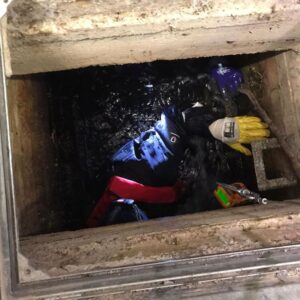
Under the Confined Spaces Regulations 1997, a confined space is an enclosed or largely enclosed space where there is a reasonably foreseeable risk of serious injury from hazardous substances or conditions within the space.
A confined space does not necessarily have to be completely enclosed, and it is not defined simply by its size. A location that appears relatively accessible can still present confined space risks.
Within drainage and sewer systems, potential confined spaces can include:
- manholes and inspection chambers
- sewers and large drainage pipes
- septic tanks
- cesspits
- pumping stations and wet wells
- storage tanks and vessels
- underground chambers
The conditions within these environments can also change, making proper assessment essential before work begins.
Why are drains and sewers potentially dangerous confined spaces?
Working below ground in a drainage or sewer system can expose workers to hazards that may not be immediately apparent from the surface.
One of the most significant is the atmosphere within the space. Toxic or flammable gases can accumulate, while oxygen levels may become dangerously low. Depending on the location and system, workers may also encounter biological hazards associated with sewage and wastewater.
Other risks can include flooding or a sudden increase in water levels, slips and falls, difficult access and egress, restricted movement and the operation of mechanical or electrical equipment.
We’ve seen conditions inside a chamber change in the time it takes to lift the cover and set up equipment, which is exactly why testing isn’t a one-off tick box before anyone climbs in. The Health and Safety Executive therefore requires confined space work to be properly assessed rather than assuming that a space is safe to enter.
Should confined space entry always be avoided?
Where reasonably practicable, yes.
The HSE sets out a clear hierarchy for confined space working: avoid entering the space where possible, where entry is unavoidable use a safe system of work, and have adequate emergency arrangements in place before work begins.
For drainage work, modern equipment can often remove the need for physical entry. CCTV drain surveying allows engineers to inspect the internal condition of pipes and drainage systems remotely. High-pressure water jetting and other specialist equipment can also allow some blockages, deposits and obstructions to be tackled from outside the confined space.
Avoiding entry can significantly reduce risk, which is why establishing whether somebody actually needs to enter the space should form part of planning the job.
When might confined space entry be necessary?
There are situations where remote equipment alone cannot complete the work.
Physical entry may be required to carry out certain inspections, repairs, maintenance or cleaning operations, particularly within larger chambers, tanks, pumping stations and sections of sewer.
The decision should be based on the specific task and conditions rather than convenience. If entry is necessary, the hazards need to be identified and appropriate control measures established before anyone enters the space.
What needs to happen before entering a confined space?
Every situation is different, so the precautions required should be determined by a suitable risk assessment and safe system of work.
This can include considering the nature and condition of the space, the work being undertaken, access and exit arrangements and any substances or processes that could create additional hazards.
Depending on the risks identified, preparations may include atmospheric testing, ventilation, isolation of incoming flows or equipment, communications between those inside and outside the space and appropriate personal protective equipment.
The people carrying out the work also need the appropriate training, knowledge and experience for the task.
Why is atmospheric testing important?
You cannot rely on sight or smell to determine whether the atmosphere within a confined space is safe.
Testing may therefore be required before entry to identify potentially dangerous atmospheric conditions, including oxygen deficiency and hazardous gases.
Depending on the circumstances and risk assessment, conditions may also need to be monitored while the work is taking place. This is particularly important where the atmosphere has the potential to change during the job.
Ventilation or other controls may be required before and during entry according to the conditions identified.
What equipment is used for confined space entry?
There is no single equipment list that applies to every confined space job. The equipment required depends on the risks identified and the work being undertaken.
It may include gas detection and atmospheric monitoring equipment, ventilation equipment, harnesses and retrieval systems, suitable lighting, communications equipment, protective clothing and respiratory protective equipment where appropriate.
Safe access and egress must also be considered. For underground drainage systems, this can be particularly important because the normal access point may be a vertical manhole or another restricted opening, which changes how a team gets in, gets out and gets someone out quickly if they need to.
What happens if there is an emergency?
Emergency arrangements are a fundamental part of confined space planning.
The Confined Spaces Regulations require suitable and sufficient arrangements for rescuing people in an emergency. These arrangements need to be established before entry takes place.
A rescue plan should take account of the particular space, its access arrangements and the risks involved. Suitable rescue and resuscitation equipment may also be required.
Crucially, the HSE advises that emergency planning should not simply rely on the public emergency services. The people, procedures and equipment required to respond to a foreseeable emergency need to form part of the arrangements for the work itself.
Who can carry out confined space entry?
Confined space work requires people with appropriate competence for the work they are carrying out.
Training is important, but safe confined space working also depends on understanding the particular environment, recognising the hazards and knowing how to use the required safety and rescue equipment.
This is particularly relevant for drains and sewers, where conditions below ground can be very different from those visible at surface level, sometimes by a lot more than the surface would ever suggest.
For businesses, facilities managers and property owners, using an experienced drainage contractor means the requirement for entry can be properly assessed and the appropriate working methods established. Our own teams are City & Guilds certified in confined space safety, which matters less as a certificate on a wall and more as a habit, testing, checking, planning, before anyone goes near an entry point.
How can Drain & Sewer Services help?
Drain & Sewer Services has more than 50 years’ experience working with drainage and sewer systems across the South of England.
Our teams regularly work underground and in confined spaces, and our crews are trained to assess the relevant risks, safety equipment and procedures required for the particular situation.
We also have specialist equipment that can help us investigate and resolve drainage problems without confined space entry where this is possible. Our CCTV surveying equipment, for example, allows us to inspect drainage systems remotely and establish the condition and location of problems before determining the most appropriate course of action.
Sometimes the job needs a physical presence, and a proper assessment of the space, rather than remote equipment. A few years ago we were called in to clear blocked fish passes at the Bombay Sapphire Distillery in Laverstoke, a site with over a thousand years of history, where the River Test actually runs beneath several of the buildings. The passes needed clearing so fish could move freely again and a turbine could go back into operation, and the risk wasn’t the enclosed space alone, it was the water, fast-moving, constant and cold, exactly the kind of hazard the confined space regulations are built around. It’s the sort of job that only really works if the assessment, the equipment and the experience are all in the right place before anyone gets near the water.
Where further work is needed, our drainage services include cleaning, unblocking and repair, allowing us to provide a solution based on the requirements of the individual site.
Need help with a drain or sewer problem?
If you have a drainage or sewer problem involving a manhole, chamber or other potentially confined space, do not enter it without first considering the risks.
Drain & Sewer Services can assess the problem, determine the most appropriate method of investigation and establish whether confined space entry is necessary.
Call us on 01252 312738 to discuss your requirements or request a free estimate.
Frequently asked questions
Are manholes classed as confined spaces?
A manhole may be a confined space where its enclosed nature creates a reasonably foreseeable specified risk. It should therefore be properly assessed before entry rather than assumed to be safe.
Is a sewer a confined space?
Sewers can meet the definition of a confined space because of their enclosed nature and the potential for hazards such as toxic gases, oxygen deficiency or flooding.
Can a drain be inspected without entering it?
Often, yes. CCTV drain surveying can be used to inspect pipes and drainage systems remotely, helping to identify blockages, damage and other problems without physical entry.
Do you need training to enter a confined space?
Anyone involved in confined space work needs appropriate training and instruction for their role and the risks involved. The precise requirements will depend on the space and the work being undertaken.
Is a rescue plan required for confined space entry?
Yes. Where confined space entry takes place, suitable and sufficient emergency arrangements must be established before work begins. These should be appropriate to the risks and circumstances of the particular job.
